Can A Baby Skunk Spray You
Skunks are one of the most frustrating animals in the city. They have no predators just like raccoons so wander freely wherever they want. Skunks are nocturnal animals, also like raccoons that tend to forage for grubs in the ground but will also access garbage. Skunks are unlikely to enter an attic as they are not especially good climbers. However, they are skill burrowing animals and can burrow under any structure from a shed to a house with no foundation to a gazebo in the back yard. Decks are the most common place for them to live and if they are living on your property you can expect regular sprayings. This is why skunks are perhaps one of the worst pests in nature. They are easily frightened however and can be spooked by turning on a light. Do not try to spook it yourself or you will get sprayed.
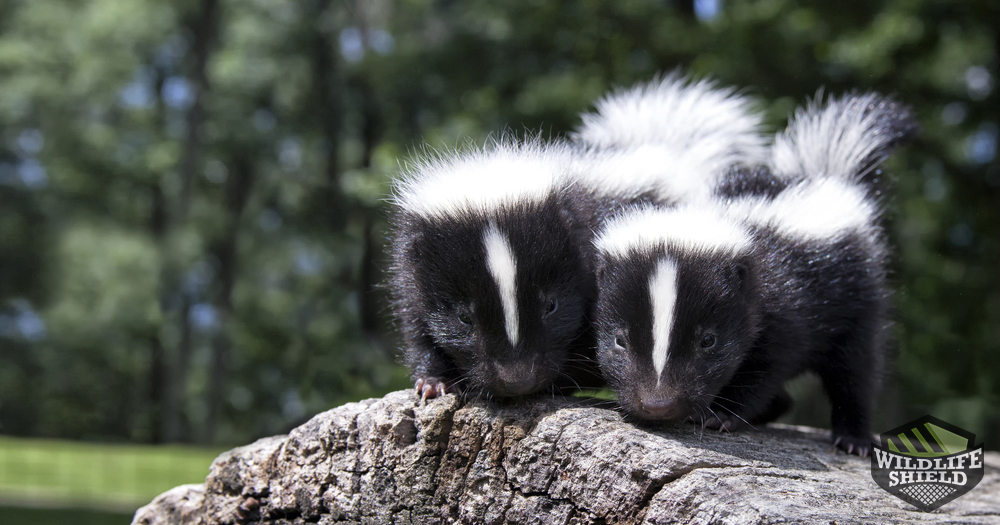
Skunks mate from February all the way to march and will result in a lot of skunk babies wandering around. The reason for this is unlike highly aggressive raccoon mothers a skunk mother is far more easily frightened. A skunk mother can be scared away by an animal or human and leave her babies behind. Now alone skunk baby is very likely to be retrieved but if you have found one on your property do not assume it is defenceless. The skunk baby, from birth, can release a smell. By the fourth month, they can aim it accurately at a target. SO if yo9u find a small skunk baby do not approach it as they will spray you.
A skunk’s spray can travel very far. They can spray up to five meters or fifteen feet away hitting a target with unnatural accuracy. The chemical it is made of does not smell terrible on its own, it simply smells terrible even if there is very little of it. I affect mammal noses in the same way as humans and anything that approaches the skunk is in danger of getting sprayed. The chemical they spray I a genuine spectacle of evolution. The spray of a skunk is made of mainly three very low molar weight thiol compounds, (E)-2-butene-1-thiol, 3-methyl-1-butanethiol, and 2-quinolinemethanethiol among other compounds. All of these compounds are easily smelled by humans at tiny volumes, as low as eleven parts per million.
If you have a skunk living on your property, burrowed under a structure there is a way to get rid of them. It is a process and involves a great deal of work but if you hire a professional the work will be done in one day and you will be protected for two years against anything getting under the structure that was sealed. Trenching involves digging one foot by six-inch trench around the perimeter of the structure. This is attached to the side of the structure and buried down one foot and six inches out. This is a very effective method of permanently ridding yourself of burrowing wild animals.
