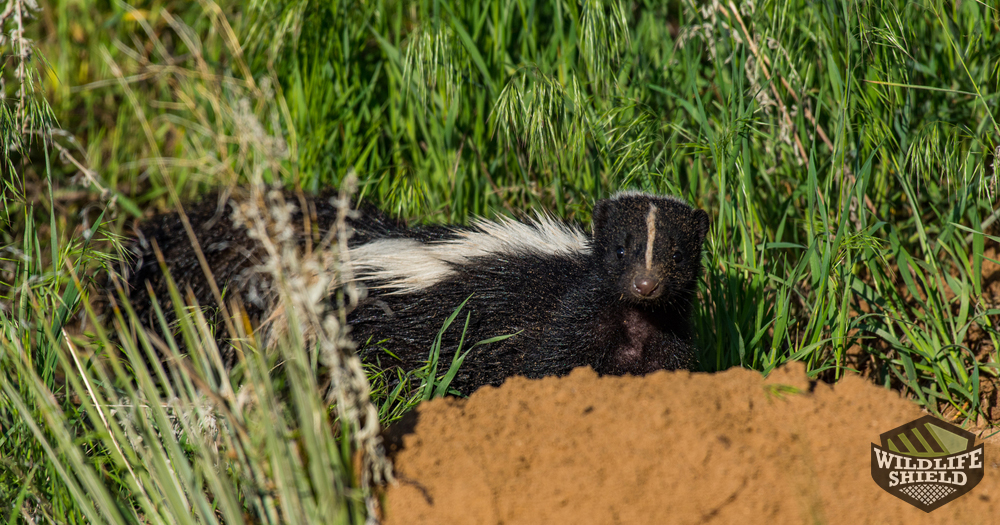
Relocating Skunks in Ontario
Trapping I a greatly misunderstood concept in Ontario. It is important to know that skunks are protected wildlife in Canada and killing them is illegal. That is not the reason for trapping. The purpose of trapping is to relocate the animal to a park and release it, the law is you cannot relocate an animal farther than one kilometre from where you found it. While doing this for a raccoon is not so dangerous with a skunk there is a chance that when you try to move the cage it will spray you. This is a common issue with skunk trapping and can be very difficult to deal with. The smell itself cannot be removed easily without strong chemicals and even then that will just clean your clothing, you will still smell. The tomato juice bath comes from a place of logic, the acid from the tomatoes should break down the smell. It does not. You will need to clean yourself with a soap product made to remove skunk smells. The reason it smells so bad is that is made of mainly three very low molar weight thiol compounds, (E)-2-butene-1-thiol, 3-methyl-1-butanethiol, and 2-quinolinemethanethiol among other compounds. These chemicals will smell terrible at parts per million as low as 11. This means you can scrub yourself and your clothes clean but even just a few particles of this chemical will make you smell terrible.
The most common time to find skunks on your property is in mating season. This is also the time of year that male skunks and female skunks are most aggressive and the most likely to spray. Sadly this period lasts for half the year. From February to March. This is when males battle over females by spraying each other and females choose to refuse a mate by spraying them as well. At this time if this occurs on your property no trap is going to help. The best option is to stay away until the mating ritual is complete. They will then vacate the property. Or worse, a female may decide to burrow under your shed or deck. She will be pregnant and will give birth to skunk babies that can spray from birth and can aim at four months. This can be a real disaster and getting rid of them will take more than a trap. You will have to permanently exclude them from the area. This is a catch-all term used in wildlife control for sealing off entryways animals can use to enter or burrow under a structure. This process is complicated and hiring a professional would be much smarter but if you want to try it yourself you will need the following: Waterproof galvanized steel mesh with holes small enough to stop a mouse, they can enter an opening as small as a quarter so make sure the holes are small. This will prevent many different animals from burrowing under your deck. Dig one foot by six-inch trench around the perimeter of the structure right up against it. Attach the mesh to the bottom of the structure and bury it one foot deep and six inches out. This will prevent burrowing animals from getting under your shed, deck, or any other structure on your property.
